
AI robotics & coordination systems
Multi-unit coordination, task allocation, and control logic for physical automation.
AI ENGINEERING
We bridge the gap between simulation and steel — engineering the robotic coordination and digital twins that turn AI into industrial muscle. We don't do demos; we build the intelligence that powers the physical rebirth of industry.
LIVE KINEMATIC SIMULATION
A browser-native forward-kinematics model of the Universal Robots UR5e, with live joint limits computed against the ground plate. Drag the scene to orbit; drive each joint from the console. This is the same simulation layer our engineers use before a single physical move is commanded.
FIG. AE-00 — INTERACTIVE FK MODEL, JOINT LIMITS LIVE · 互動正向運動學模型,限位即時計算
ENGINEERING FOCUS
Multi-unit coordination, task allocation, and control logic for physical automation.
Environments modelled before capital is committed; behaviour tested before deployment.
Defect detection, OCR, recognition — production models, not lab curiosities.
Predictive and prescriptive maintenance, and workflow intelligence for operations.
FIELD DEMONSTRATIONS
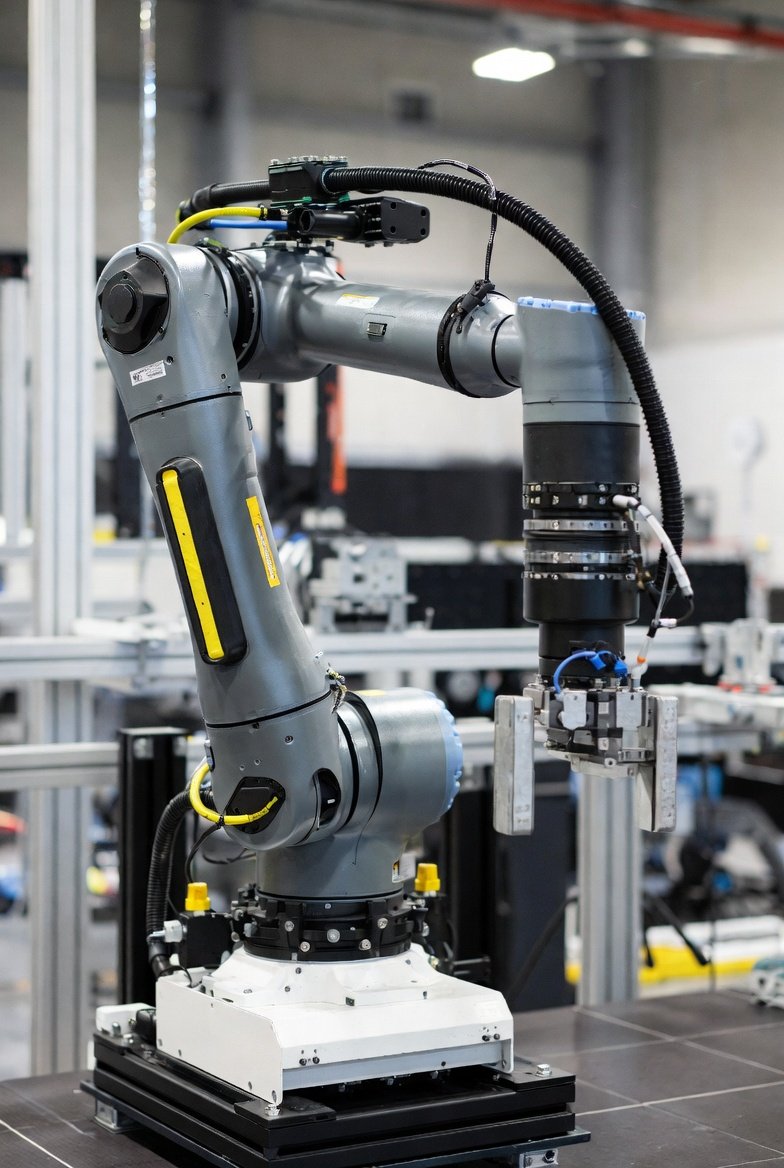
Left: the detection and tracking pipeline running on real, moving closed-circuit footage. Right: the kinematic model from the simulation above, applied and tested on a physical arm in the field.
DESIGN PRINCIPLES
Learn from real-world feedback
Adapt across environments
Optimise continuously
Be deployable, scalable, and market-ready
No abstract demos. Only intelligence that works.
A scoped demonstration on your use case, or a quotation for a pilot deployment